
Age Verification Required
This website contains information about firearms and NFA items. You must be 21 years of age or older to enter.
By entering this site you agree to our Terms & Conditions
Firearms • Fingerprinting • Engraving
Sales@HoraceFirearms.comBy Appointment · Mon–Fri 10am–6pm
Follow Us


Thanks for your order — you're all set. We'll email you a receipt shortly, and we'll contact you within 1 business day to schedule your fingerprinting and Form 4 appointment.
Suppressors don't ship to your door — you'll pick yours up in person once ATF approval comes through, and we'll walk you through the entire process.
You will be returned to Horace Firearms shortly.
Effective today. Signed by the Director. A lot of people haven't seen it yet.
Suppressors, SBRs, SBSs, and AOWs.
There are still a lot of questions. We're reading every page and we'll keep you updated.
Read ATF's Announcement → Browse Suppressors →A suppressor is one of the most expensive items on your Form 4 — and one of the most neglected after the paperwork clears. Most owners shoot it for months before wondering whether it needs any attention. The answer depends entirely on what you're shooting through it.
This guide covers everything you need to know about keeping your suppressor in top condition: how often to clean by caliber, which solvents are safe on which materials, the difference between user-serviceable and sealed cans, how to store it properly, and when to stop trying to fix it yourself.
Every round fired sends hot gas, unburned powder, carbon, and metallic fouling through your suppressor's baffles. Over time, this residue accumulates and hardens. Left long enough, it does real damage:
Sound suppression decreases. Residue reduces the internal volume available for gas expansion, which is what makes the suppressor work. A dirty suppressor is a louder suppressor.
Weight increases. Accumulated carbon adds mass. On a precision rifle, even a few extra ounces on the muzzle can shift your point of impact and throw off established DOPE. A useful practice: weigh your suppressor when it's new and record that number. If it gains two or three ounces over time, it's time to clean regardless of round count.
Baffles can seize. On user-serviceable suppressors, heavy buildup can lock the baffle stack together so tightly that disassembly requires professional tools — or becomes impossible without damage. Cleaning on schedule prevents this entirely.
Carbon lock at the mount. If you're running a quick-detach system, carbon buildup at the mount interface can make removal difficult or cause misalignment. Regular cleaning and proper torque procedures prevent this.
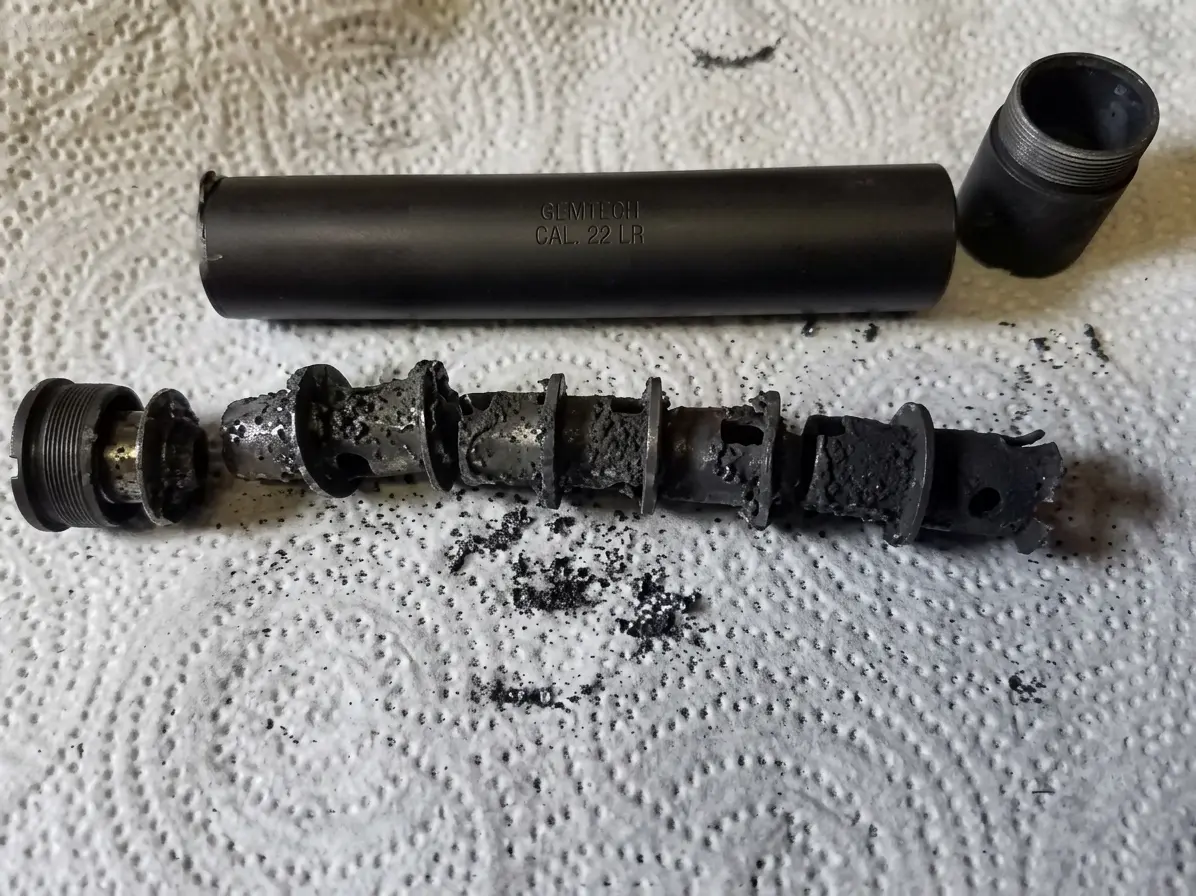
A disassembled rimfire suppressor showing heavy carbon and lead fouling — the result of skipping cleaning too long.
Cleaning frequency isn't just about round count — it's primarily about caliber and ammunition type. Rimfire ammunition is dramatically dirtier than centerfire, and subsonic pistol rounds create more fouling than high-pressure rifle ammunition.
The dirtiest suppressors you can own. Rimfire ammunition uses waxy lubricants and unjacketed lead projectiles that deposit heavily on baffles. High-volume shooters should clean after every range session. This is the only suppressor category where skipping maintenance causes real, near-term damage.
Moderately dirty. Lead and copper fouling accumulates, especially with cast-lead or subsonic loads. Subsonic .300 BLK behaves more like a pistol can than a rifle can in terms of fouling — treat it accordingly. Check weight periodically rather than relying solely on round count.
High-pressure, high-temperature centerfire rifle ammunition burns relatively clean and actually self-cleans baffles to some degree. Many sealed rifle cans will run 5,000–10,000 rounds or more without any maintenance. Monitor weight gain rather than chasing a round count.
Suppressor cleaning mistakes tend to be expensive. The most common errors come from treating a suppressor like a regular gun part and reaching for whatever solvent is on the bench.
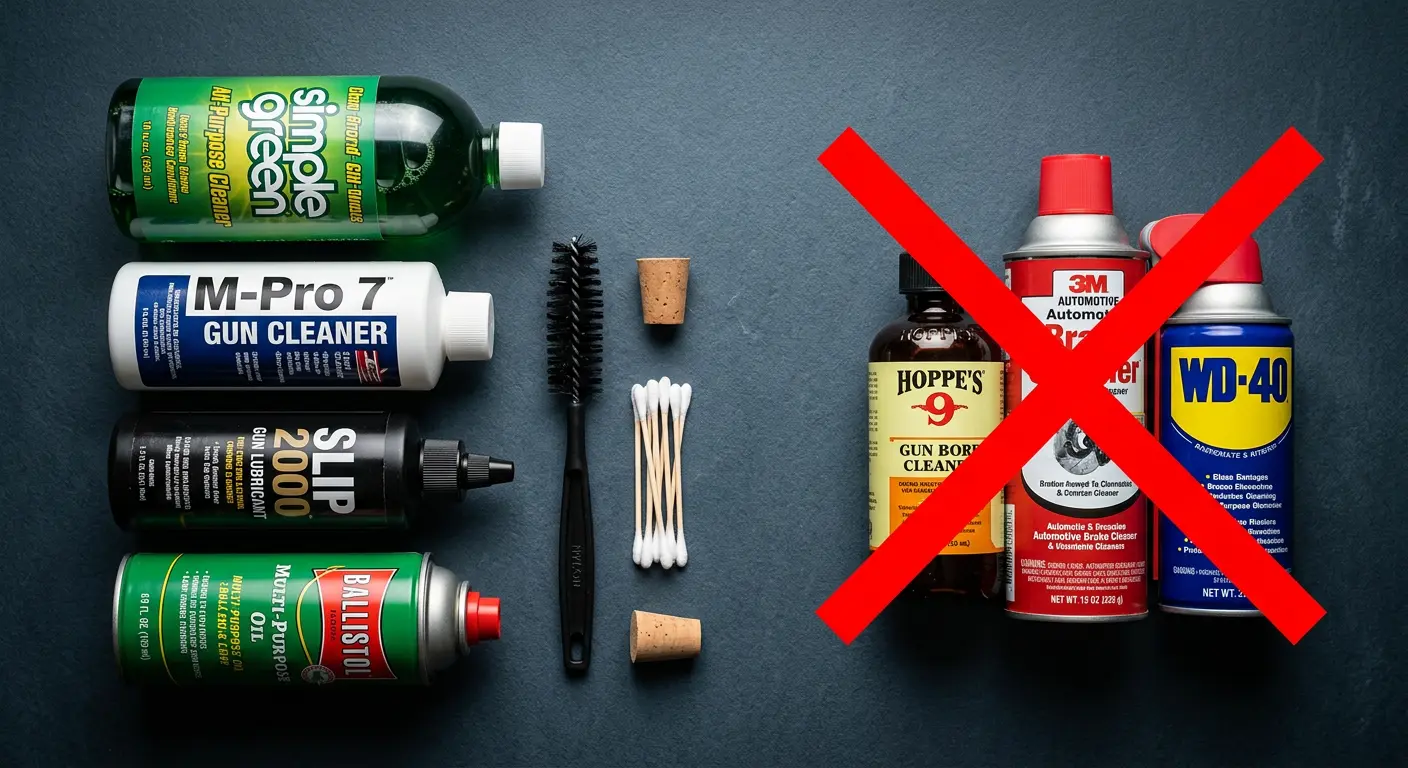
Left: safe cleaning solvents and tools. Right: products to avoid on aluminum and coated baffles.
Aluminum baffles are the most vulnerable. Alkaline solutions attack aluminum. Ammonia-based cleaners, many commercial bore solvents, and industrial or automotive degreasers are all potentially damaging. Automotive and industrial degreasers in particular are designed for steel components and can quickly erode aluminum or titanium suppressor materials. Always confirm what your baffles are made of before choosing a cleaner.
Specific products to avoid on aluminum or coated baffles:
Hoppe's No. 9 — contains ammonia, which attacks aluminum directly. It's a trusted product for cleaning steel firearm parts, but on aluminum baffles it causes oxidation and surface degradation over time. Many suppressor manufacturers call it out by name as something to avoid on aluminum components.
Brake cleaner — an extremely aggressive solvent designed to strip grease from steel brake components. It attacks coatings, anodizing, and certain polymers. Chlorinated brake cleaner in particular is capable of stripping protective finishes off baffles and the tube interior in a single application.
WD-40 — the problem isn't corrosiveness, it's what it leaves behind. WD-40 is primarily a water displacer and light petroleum-based lubricant. Under the heat of firing, that petroleum residue bakes onto baffles and becomes a sticky, carbon-attracting film that makes subsequent cleaning significantly harder. It also doesn't provide adequate lubrication for suppressor threads and can gum up a mount over time.
Simple Green at full strength — diluted Simple Green (1:4 ratio) is one of the recommended cleaners for most suppressor materials. Full-strength Simple Green is too alkaline for aluminum and can cause surface damage with extended contact. Always dilute it.
Automotive or industrial degreasers (including carburetor cleaner) — formulated for steel components and often contain harsh acids or solvents that quickly erode aluminum and titanium suppressor materials.
Safe choices for most materials: diluted Simple Green (1:4 ratio for light fouling, 1:1 for heavy buildup on steel/titanium only), M-Pro 7, Slip 2000 Carbon Cutter, Ballistol, and solvents specifically marketed for suppressor use. For stubborn carbon on stainless steel only, some experienced users use CLR — but this should never touch aluminum or coated surfaces.
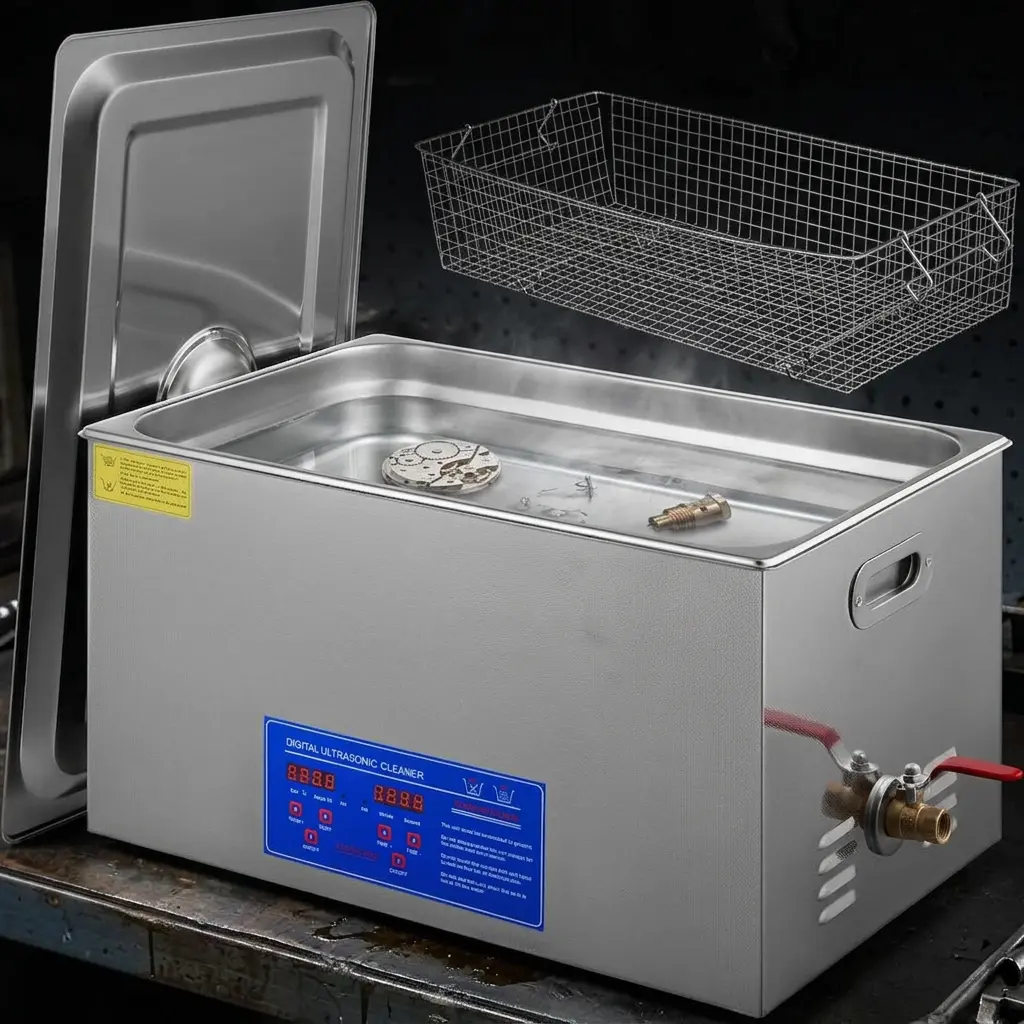
Ultrasonic cleaners are excellent tools for suppressor maintenance, but they have limits. Keep temperature below 140°F — heat above this threshold can damage DLC, hBN, and other protective coatings. More importantly, do not use ultrasonic cleaners on aluminum baffles. The cavitation process creates micro-pitting on softer metals over time. Ultrasonic cleaning is generally safe for stainless steel and titanium; confirm baffle material before proceeding.
Most effective cleaning happens in the first 10–15 minutes. Running beyond 30 minutes rarely adds benefit and increases the risk of material damage. Use distilled water rather than tap water — hard water deposits minerals on internal surfaces and chlorinated water can promote corrosion.
Quick-detach and direct-thread mounts should be snug, not cranked down. Overtightening accelerates carbon lock — where the carbon buildup between suppressor and mount fuses them together under heat and pressure. Apply a thin layer of copper anti-seize compound to threads before mounting to prevent this. Follow the manufacturer's torque specifications if provided.
Sealed suppressors are not meant to be opened. Attempting to disassemble a welded or pinned baffle stack will void your warranty and may permanently damage the suppressor. If you're not sure whether yours is user-serviceable, check the manual or contact the manufacturer before touching it.
This is the most important distinction in suppressor maintenance. Getting it wrong can cost you a warranty or a suppressor.
These have a removable baffle stack — typically accessed by unscrewing an end cap. The baffles can be removed, cleaned individually, and reassembled. Most rimfire suppressors are user-serviceable because they have to be — the fouling is too heavy to manage any other way. Many pistol suppressors are also user-serviceable. Some modular centerfire suppressors offer this as well.
When disassembling: let the suppressor cool completely first, lay components out in order, and photograph the assembly before taking anything apart. Reassemble carefully — incorrect baffle alignment can cause a baffle strike, which is both dangerous and destructive.
Sealed suppressors have baffles that are welded, pinned, or otherwise permanently fixed inside the tube. Most centerfire rifle suppressors fall into this category. The sealed design provides strength, durability, and optimized performance — and for high-pressure rifle calibers, it works because the ammunition keeps things relatively clean on its own.
If a sealed can's performance has degraded noticeably and soaking doesn't resolve it, the next step is the manufacturer — not a wrench.
Since you can't disassemble a sealed can, your cleaning options are different — but there are effective methods that don't require opening anything up.
This is the most accessible method and works well for moderate buildup. Here's the procedure:
1. Let it cool completely. Never attempt to clean a suppressor that's still hot from use. Let it cool to room temperature — at least 30 minutes after the last round.
2. Remove from the firearm and disassemble the mount. Clean the mount interface separately before starting.
3. Plug one end with a rubber stopper or cork. Make sure it seals completely — a leaking stopper defeats the purpose. Wine corks or rubber lab stoppers work well.
4. Fill with an appropriate solvent. Diluted Simple Green (1:1 with distilled water) is the safest all-around option for most materials. For stainless steel baffles, M-Pro 7 or Slip 2000 Carbon Cutter work well. Do not use ammonia-based solvents or automotive degreasers regardless of baffle material.
5. Plug the other end and let it soak. For light maintenance, 2–4 hours is sufficient. For heavy buildup, an overnight soak (8–12 hours) may be needed. Gently rotate the suppressor every hour or so to agitate the solvent against the baffles.
6. Drain, rinse, and repeat if necessary. Drain the solvent — you'll see carbon and fouling come out. Rinse with clean distilled water, then repeat the soak if the can is still heavily fouled. The solvent will be significantly darker the second time if there's still substantial buildup.
7. Dry completely before storage or use. This is critical. Any residual moisture inside a sealed suppressor will corrode the baffles. Use compressed air to blow through both ends, then let it air dry for at least 24 hours in a warm, dry location. Do not store or shoot until completely dry.
An ultrasonic cleaner is an excellent option for sealed suppressors made of stainless steel or titanium. The cavitation process (microscopic bubbles collapsing against surfaces) breaks up carbon fouling without any disassembly required.
Fill the ultrasonic tank with diluted Simple Green or a dedicated ultrasonic cleaning solution and submerge the suppressor completely. Run at 104–122°F (40–50°C) for 10–15 minutes. Do not exceed 140°F and do not run longer than 30 minutes — extended runs rarely provide additional benefit and can damage coatings.
Important: Do not use ultrasonic cleaners on aluminum baffles. The cavitation process creates micro-pitting on softer metals over time. Confirm your baffle material before proceeding — when in doubt, stick with the cork-and-fill method.
After ultrasonic cleaning, rinse thoroughly with distilled water and dry completely using the same procedure as the cork-and-fill method above.
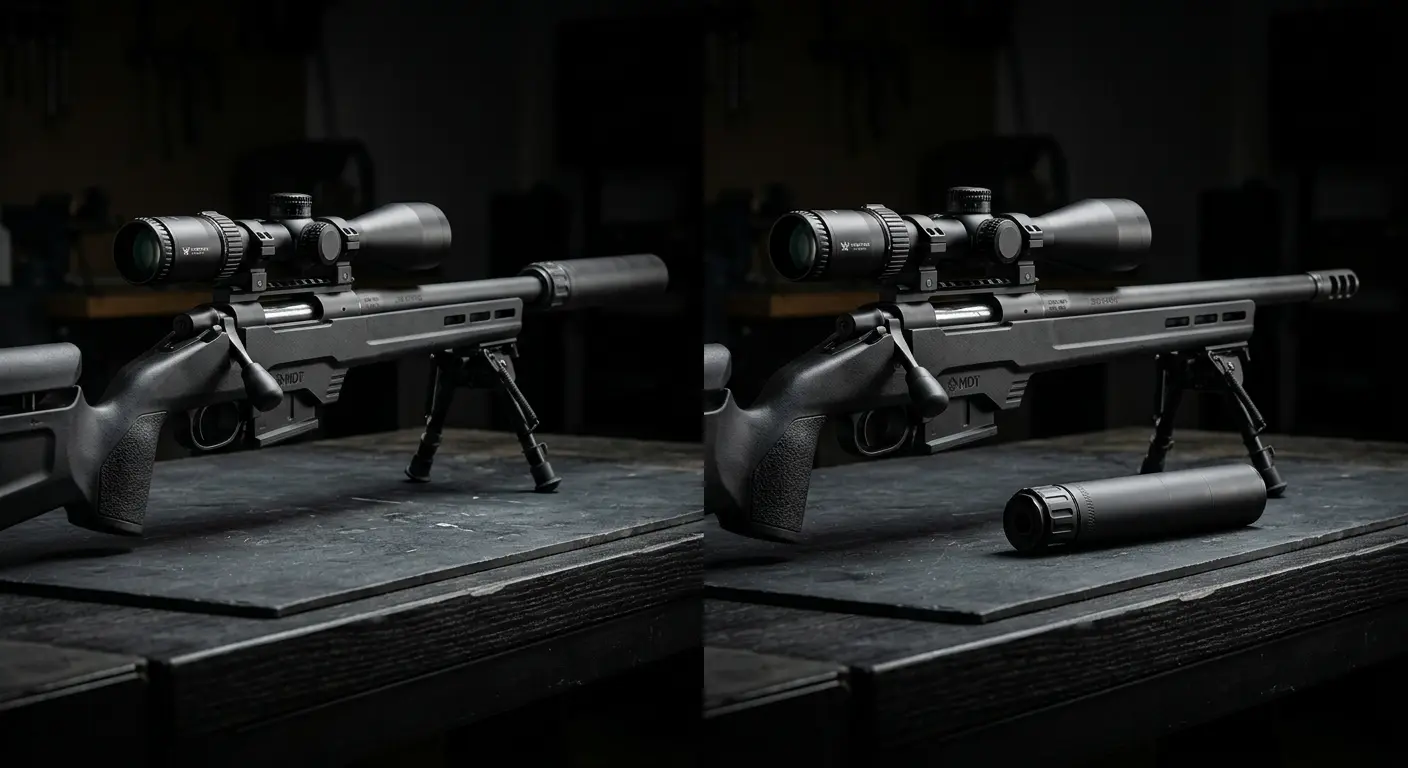
Remove the suppressor from the host firearm before long-term storage.
Always store suppressors dry. Storing a suppressor with moisture inside — whether from cleaning solvent, wet suppression technique, or condensation — accelerates corrosion. After any cleaning or wet use, dry completely (24 hours minimum air-dry, or use compressed air) before storing.
Remove the suppressor from the host firearm when storing long-term. Leaving a suppressor attached for extended periods, especially after firing, creates conditions for carbon lock and can accelerate corrosion at the mount interface. It also puts stress on the barrel threads over time.
Climate-controlled storage. Store in a dry, temperature-stable environment. Extreme humidity promotes corrosion on any metal surface, regardless of material. A basic dehumidifier rod in a safe works well for suppressors stored with firearms.
Orientation. Store horizontally or muzzle-end down. Residual solvent or moisture from a recent cleaning should drain out, not pool in the baffles.
Some problems are beyond what a owner should attempt to fix. Knowing when to stop and contact the manufacturer or a qualified gunsmith is part of responsible suppressor ownership.
Noticeable increase in sound level that persists after cleaning. If the suppressor is clean and still noticeably louder than it used to be, something has changed internally — baffle damage, a crack in the tube, or a seating issue.
Point of impact shift. A suppressor that causes meaningful POI shift on a precision rifle may have a baffle alignment issue or internal damage. Some minor shift is expected and consistent; a new, sudden change is not.
Difficulty threading onto the mount that isn't resolved by cleaning the threads. This can indicate thread damage or a bent/warped mounting surface.
Unusual rattling or movement of internal components that wasn't present before. On a sealed can especially, this suggests something has broken loose internally.
Significant unexplained weight gain that doesn't resolve after soaking and cleaning. If the suppressor still weighs considerably more than its factory spec after a thorough cleaning, there may be debris or damage that requires professional tools to address.
A baffle strike. If you suspect a baffle strike occurred — typically indicated by a sudden loud report, unusual recoil, and/or visible damage to the muzzle end — stop shooting immediately. Do not fire the suppressor again until it has been inspected by the manufacturer or a qualified gunsmith. Continuing to fire after a baffle strike can cause serious injury.
We handle everything in one visit — suppressor transfers, NFA trusts, and EFT fingerprinting. Browse our catalog or reach out with any questions.
Call or text 701-866-0050 · sales@horacefirearms.com